Mealtimes are a fantastic opportunity for parents to role model and help children in their journey to exploring and accepting new foods. Through positive role modelling, we can help teach children the social experience of eating, and make them feel more comfortable around unfamiliar foods.
5 ways to role model at mealtimes:
1. Eat together
Aim to sit down together at a table for at least one meal or snack time each day – choose a time that suits your family’s schedule and doesn’t feel rushed. A good way to reframe your mindset about mealtimes is to think about them like they’re class time. You are the teacher, and it’s important that you show up to class.
2. Describe the food being served
Remember that meals are class time, so you need to discuss the subject… FOOD. Use language to describe the sensory properties of the food, such as the way it looks, smells, feels, tastes and sounds as you bite into it. See below some of our favourite descriptive words to use at mealtimes:
Appearance: lumpy, smooth, mushy, sticky, wet, dry, heavy, fluffy
Smell: strong, big, sweet, odourless, sour, salty
Texture: chewy, soft, fluffy, dry,mushy, hard, runny, sticky, tender
Taste: bitter, salty, sour, ripe, sweet, bland, ripe
Sound: chomp, crunch, snap, fizzy, crackle, pop.
3. Food is the focus, NOT the child
At mealtimes, remember that the focus of mealtimes (the class and learning) is about the food, not the child. Try not to comment on what your child is or isn’t eating. It’s also important to avoid adding pressure, such as “one more bite” or ‘“just try a little” as this doesn’t help children accept and eat new foods in the long run, it often just leads to more mealtime battles. If you get stuck on what to talk about, go back to describing the food – there are lots of senses to explore.
4. Emphasise motor movements
Try to emphasise and over-exaggerate oral motor movements to help teach your kids how to eat. You can do this by:
- over-emphasising the chewing motion to show the way our mouths move to chew food
- Exaggerate the swallowing process
- Describe the process of food moving down from the mouth to the stomach
5. Make food fun
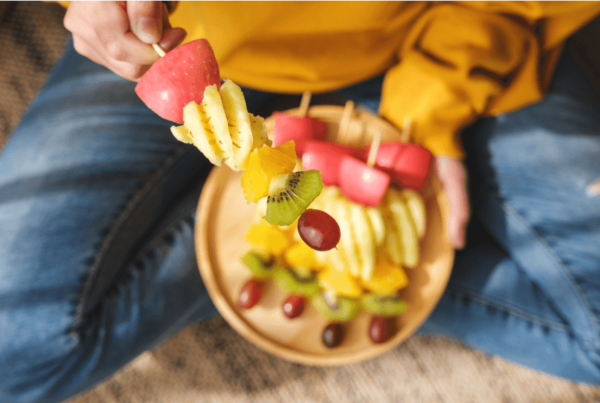
Try to make mealtimes and the food you are serving fun! This helps kids stay engaged during mealtimes. To make food more fun, you could try making it colourful. Adding a variety of different colours and textures to the meal can make the meal more appealing. You could also play with shapes. Try using cooking cutters to alter the shapes of familiar and unfamiliar foods. Another way to make mealtimes more fun, is to involve your kids in the preparing and cooking process. You could write a grocery list together, go to the farmers market, wash produce, peel potatoes, and serve the food together.
*Remember that playing with food is encouraged, and is one of the ways children learn about new foods!
Have a go at trying these role modelling tips at your next mealtime!
References:
Toomey, K.A. (2010). Common reasons children won’t eat.
Toomey, K.A (2010). Introduction to the SOS (Sequential-Oral-Sensory) Approach to Feeding Program.
*Access additional information about SOS through www.sosapproach.com